Mental Illness is Real
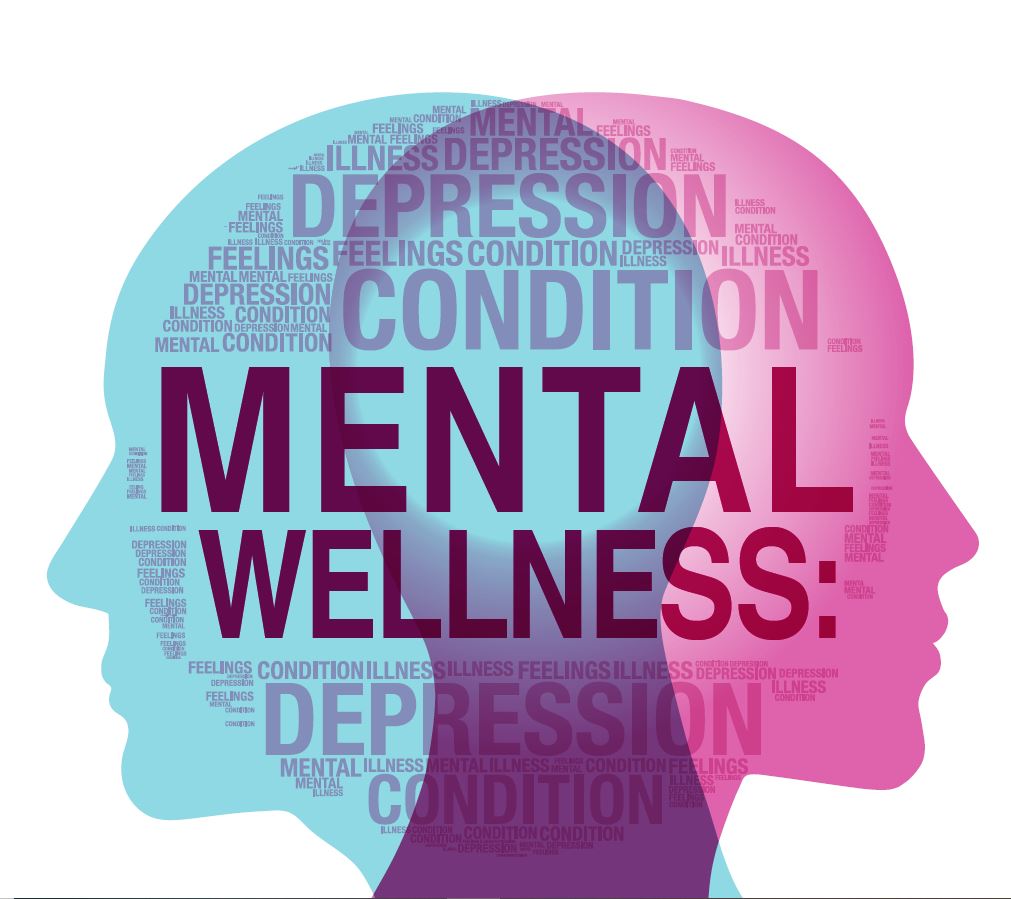
Mental illness, also called mental health disorders. It refers to a wide range of mental health conditions. They are different type of disorders that affect your mood, thinking and behaviour. For example: depression, anxiety, schizophrenia, eating disorders and addictive behaviours, such as, TOC, drugs, alcohol, pornography, games, work, emotional attachment, and much more.
Many people are still not aware of Mental disorders, and they do not understand the fact that we all may have at least one, especially in these times with such a busy lifestyle, where we barely have time for ourselves to take good care of our mental health. Mental illness is real and it’s an important topic we all as humanity should be able to talk about openly, and without any barriers or shame. A mental illness can seriously make you miserable and can cause problems in your daily life, such as at school or work or in relationships. Let’s be clear about something, we all have concerns about our mental health, but what we really do about it?. Sometimes, we take it seriously when it is too late, when ongoing signs and symptoms cause frequent stress and affect our ability to function.
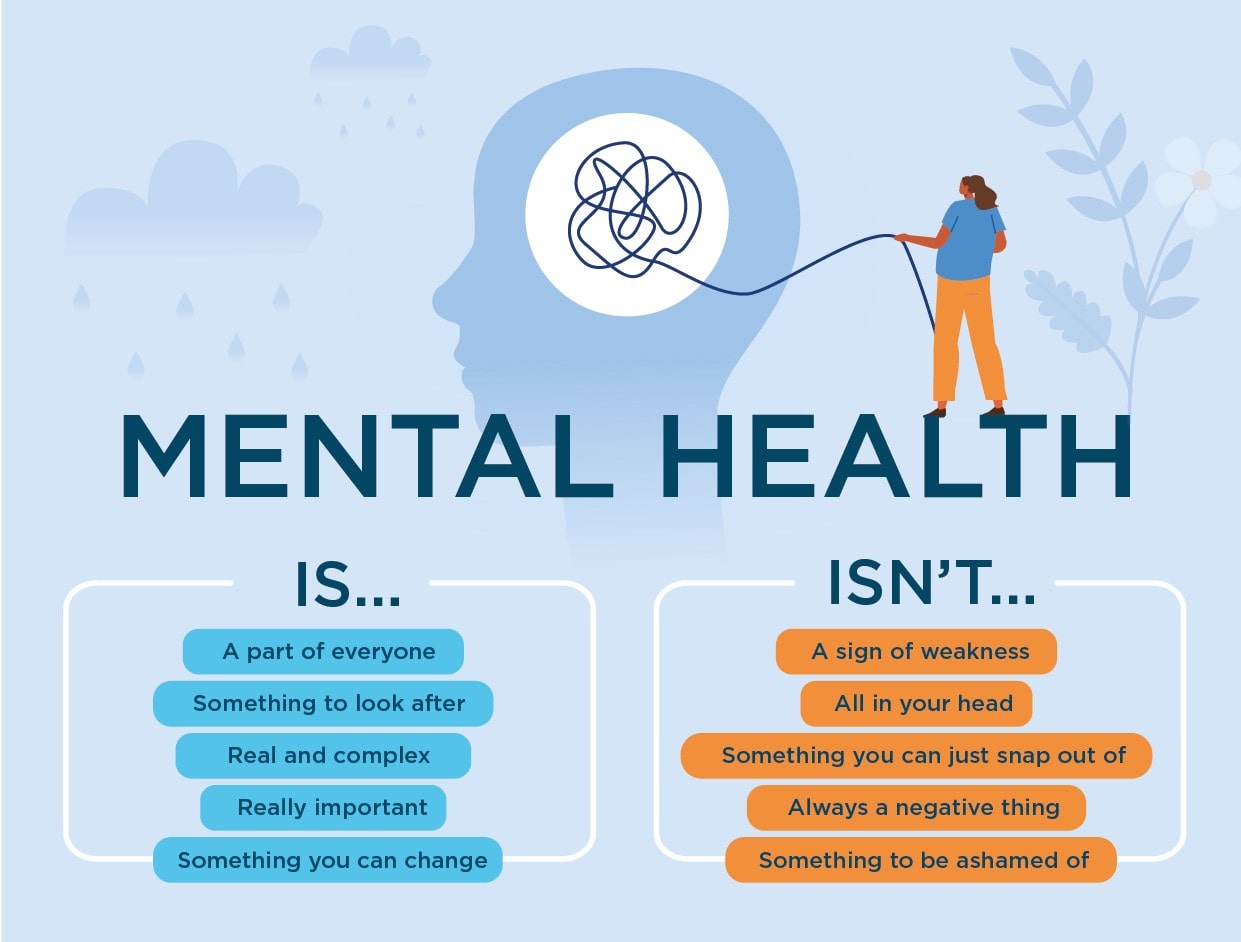
Let’s go a little deeper by mentioning some of the usual signs and symptoms of mental illness, of course it may vary depending on the actual disorder, factors, and circumstances, but let’s take a look at a few symptoms that can affect emotions, thoughts and behaviours:
- Confused thinking or reduced ability to concentrate
- Excessive fears or worries, or extreme feelings of guilt
- Extreme mood changes of highs and lows
- Withdrawal from friends and activities
- Significant tiredness, low energy or problems sleeping
- Detachment from reality (delusions), paranoia or hallucinations
- Inability to cope with daily problems or stress
- Trouble understanding and relating to situations and to people
- Problems with alcohol or drug use
- Major changes in eating habits
- Sex drive changes
- Excessive anger, hostility or violence
- Suicidal thinking
- Feeling sad or down
:max_bytes(150000):strip_icc()/definition-of-mental-illness-4587855-v1-cd7f9f37c61c49099ac8ede282db1e73.png)
It is also important to mention that sometimes symptoms of a mental health disorder shows in physical ways, like a stomach pain, back pain, headaches, or other unexplained aches and pains.
If you have suicidal thoughts or any excessive behaviour as the common ones mentioned above, if you think you are having an experience with some mental illnesses, if you think you may hurt yourself or attempt suicide, get help right away, before it is too late. Below are a few contacts you can easily reach out for help, either online or through a quick call.
- Call a mental health specialist, such as a therapist, psychologist, psychiatrist, health coach.
- Reach out to a close friend or loved one.
- Contact a minister, spiritual leader or someone else in your church community.
- Call 911 or your local emergency number immediately.
- Online therapy is also a great option that provides a private, convenient and often affordable access mental health help without having to visit a therapist or doctor in person. Instead, you can easily connect and request your therapist and have a video call, phone call, text message conversation, etc. from the comfort of your own home, and depending on your needs and preferences.
Following are a few safe online spaces in which you can address topics like depression, anxiety, stress, anger managemnetn, insomnia, traumas, panick attacks, eating disorders, life transitions, relationship issues, and more :
- Best Online Therapy Services
- Talkspace.com
- Betterhelp.com
- ReGain
- PrideCounseling
- Cerebral
- LiveHealth Online
- MDLive
- TeladocHeatlh
Always remember that Mental illness and/or suicidal thinking doesn't get better on its own, so please get help as soon as possible.
Shalom G. Navarro


Comments
Post a Comment