Neurolinguistics and Psycholinguistics: Connection in language learning.

To explain the relationship between Neurolinguistics and Psycholinguistics we must first define what they are and what their study involve.
Neurolinguistics is a science that study how the brain reacts to language, as well as how and where our brains store our knowledge of the language that we process to understand, read, and write.
Psycholinguistics or Psychology of language is the study of the interrelation of linguistics and psychology aspects to determine the mechanism by which language is process and represented in the mind and brain for human to acquire, use and produce language.
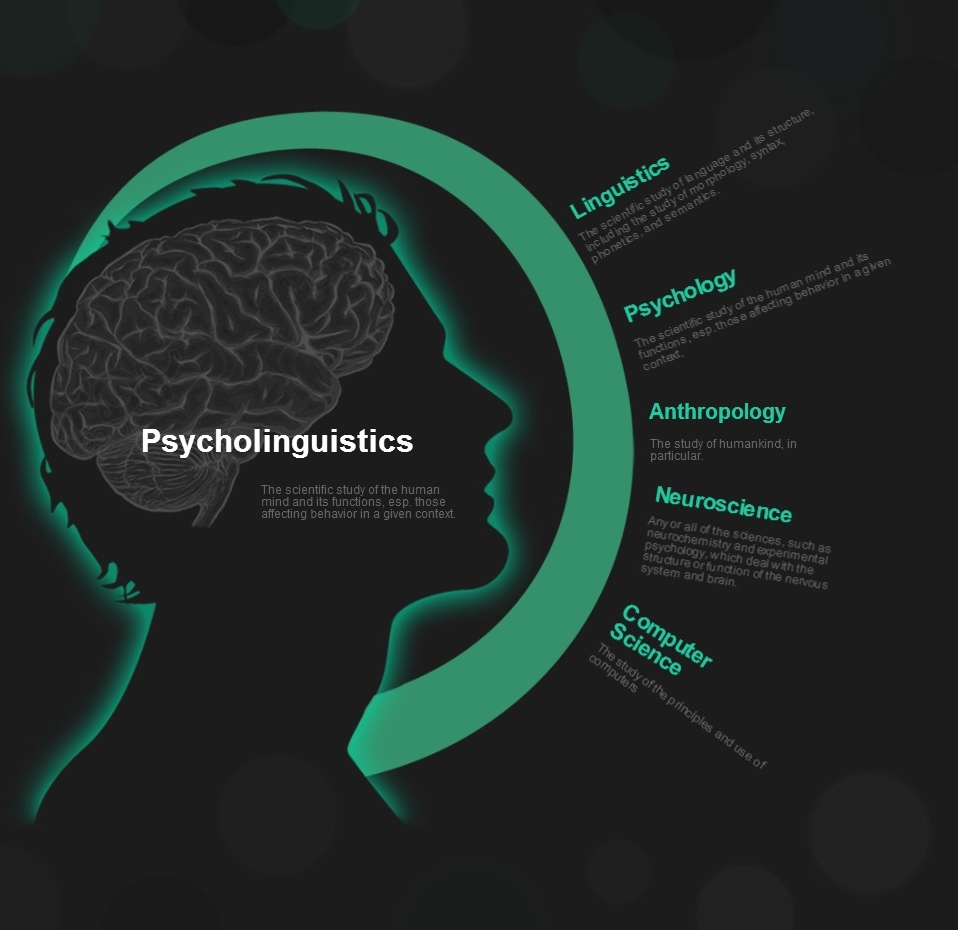
Knowing both studies, we can say that Neurolinguistics and Psycholinguistics are two disciplines that are linked regardless of their differences, they are both concerned about how language is processed by our mind and brain, that enable humans to use, comprehend and produce a language. Another relation we can mention between these 2 disciplines, is that they have theories and studies that concern the cognitive aspect of humans to be able to communicate and form grammatical structures.
“Memory is the superior (logical or intellectual) cognitive process that defines the temporal dimension of our mental organization. It is our ability to encode, store, retain, and then recall information and past experiences”. (Monica Savage, 2018)
As we can see, they are both related. Specially, on the impact they have on how humans produce and learn languages through our neural mechanism and psychological aspects. Without the input of these two disciplines, we wouldn’t determine how our brains function in language by storing information which is processed to produce speech and other external sensations like sounds, sights, and movements.

As we mentioned above, Neurolinguistics also study linguistic factors which clearly involves one of the main Linguistic studies as is “The Language acquisition”. Language acquisition was approached since the 1950s by different linguists and philosophers like Chomsky, Skinner, Piaget just to mention a few of them. Those Language acquisition theories were mainly concerned on how humans process language to be able to communicate, interpret and use grammatical structures just like Neurolinguistics and Psycholinguistics are concern, which show a great relationship on their studies of human language.

By: Shalom Garzón Navarro


Comments
Post a Comment